Introduction au projet
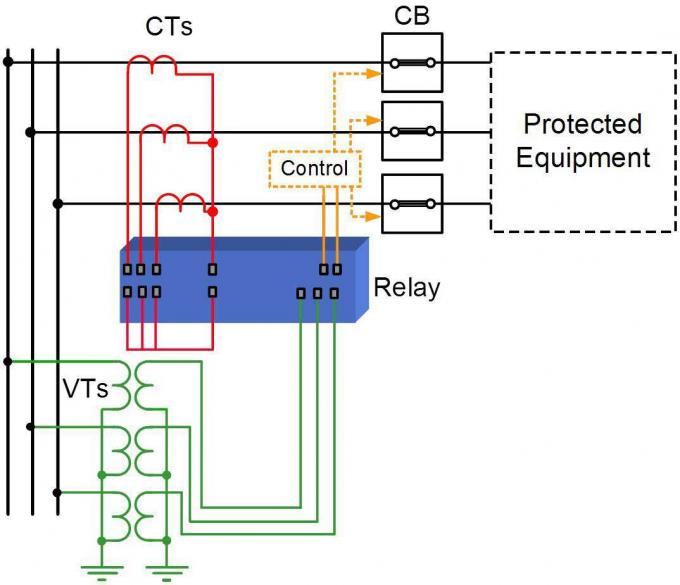
Les relais de protection sont essentiels au fonctionnement sûr des systèmes d'alimentation électrique.les rapports de fréquence et de phase et initier le fonctionnement de l'interrupteur lorsque des conditions anormales sont détectéesLes essais réguliers permettent de vérifier que le système de protection fonctionne correctement lorsque cela est nécessaire et reste stable pendant le fonctionnement normal.
1Pourquoi les tests de protection des relais sont importants
Les essais de relais permettent de vérifier les réglages de protection, les valeurs de prise et de fonctionnement, le temps de fonctionnement, la logique de démarrage, les contacts de sortie, les circuits de commande et la coordination entre les dispositifs de protection.Les essais sont particulièrement importants lors de la mise en service, après modification des réglages de protection et pendant la maintenance prévue.
2. Principales méthodes d'essai de protection des relais
Différents essais permettent de vérifier les différentes parties d'un système de protection.exigences du fabricant et normes applicables.
2.1 Essai d'injection secondaire
L'injection secondaire applique des signaux de courant et de tension contrôlés directement aux entrées du relais.Cette méthode permet de vérifier les valeurs de récupération, les caractéristiques de fonctionnement, le timing, la réponse de phase et les sorties de démarrage.

2.2 Épreuves fonctionnelles et logiques
L'essai fonctionnel vérifie la séquence de protection complète. Une défaillance simulée devrait produire le fonctionnement attendu de l'élément de protection, la réponse logique, l'alarme et la sortie de déclenchement.Ceci est important car les paramètres individuels corrects ne garantissent pas une logique globale correcte.
2.3 Épreuves de circuit et de sortie
L'essai doit vérifier les contacts de sortie du relais et le chemin de sortie vers le disjoncteur.les interblocs et la logique de blocage fonctionnent correctement, et la commande de déclenchement du disjoncteur est générée comme prévu.
2.4 Vérification des entrées de courant et de tension
Les connexions CT ou VT incorrectes peuvent entraîner des signaux de relais inexacts.Ceci est particulièrement important pour les, différentiel, distance et autres fonctions de protection sensibles aux phases.
3.
Les essais peuvent identifier des paramètres incorrects, des erreurs de câblage ou de polarité CT/VT, une séquence de phase incorrecte, des entrées défaillantes ou dérivées, des erreurs de configuration logique, un temps de fonctionnement anormal,problèmes de contact de sortie et défauts de câblage du circuit de décalage.
4. Flux de travail recommandé pour les tests de relais
- Examiner les dessins de protection, les réglages du relais, les dossiers d'essais précédents et les fichiers de configuration.
- Vérifiez le relais et le câblage.
- Confirmez les données de CT/VT et la polarité.
- Vérifiez les réglages par rapport au système de protection approuvé.
- Effectuer des essais d'injection secondaires.
- Vérifier les caractéristiques de protection et la durée de fonctionnement.
- Testez la logique, les alarmes, les contacts de sortie et les circuits de déclenchement.
- Comparez les résultats avec les valeurs attendues.
- Enregistrer les résultats et étudier les écarts significatifs.
5Quand les relais de protection doivent-ils être testés?
Les essais de relais sont généralement effectués pendant la mise en service et après le remplacement du relais, les modifications de réglage, les modifications majeures du système ou la maintenance liée à la protection.Des essais périodiques peuvent également confirmer la fiabilité à long termeLes intervalles doivent tenir compte du type de relais, de la criticalité du système, de l'environnement de fonctionnement, des recommandations du fabricant, de la politique de maintenance et des normes applicables.
6. Choix de l'équipement de test de relais
Les ensembles de test de relais modernes peuvent générer des sorties de courant et de tension contrôlées et mesurer la réponse du relais avec précision.mesure précise du tempsPour les travaux de terrain, la portabilité et les essais automatisés efficaces sont particulièrement précieux.
Introduction du produit: Calibrateur de protection contre les relais à 6 phases XHJB666
The XHJB666 Microcomputer Relay Protection Calibrator is a state-of-the-art 6-phase voltage and 6-phase current test instrument built on a high-performance embedded industrial control computer with an 8L'écran LCD couleur TFT de 0,4 pouces. Contrairement aux calibrateurs traditionnels en 3 phases limités aux tests de base de surcourant et de relais à distance, l'architecture en 6 phases prend en charge toutes les configurations standard,y compris la tension de 4 à 3, les modes de sortie à 6 tensions, 6 courants et 12 phases, permettant de tester de manière exhaustive les systèmes de protection modernes les plus complexes: protection différentielle du transformateur, protection différentielle de la barre de bus,protection du générateur, et la protection différentielle des lignes avec des systèmes de communication assistée.
Principales caractéristiques
- Une architecture de tension + courant à 6 phases prenant en charge les configurations 4V3I, 6V, 6I et 12 phases pour tester tous les systèmes de protection.
- Amplificateur de puissance linéaire modulaire à haute fidélité contrôlé par DSP éliminant le bruit de commutation pour des formes d'onde d'essai propres et sans distorsion.
- Capacité parallèle à courant élevé: une sortie parallèle en 6 phases fournit 0 ̊180 A pour les essais instantanés de démarrage à courant élevé.
- Une large plage de fréquences de 0 à 1000 Hz avec synthèse harmonique jusqu'au 20e ordre pour la vérification de la retenue harmonique et du filtrage.
- Entrée numérique de 10 canaux avec reconnaissance automatique intelligente des contacts secs et des contacts potentiels de 0 ̊250 V; sortie numérique de 8 canaux avec une résolution de temps de 0,1 ms.
- Sortie CC réglable indépendante de 110 V et 220 V pour l'alimentation en circuit de relais et de démarrage sur site.
- Modules logiciels d'essai automatisés pour la numérisation des réglages de relais, la lecture des erreurs, le stockage des données en temps réel, l'affichage vectoriel et l'impression de rapports.
- Facteur de forme compact 480×360×200mm à 19 kg pour le déploiement portable sur le terrain, avec démarrage en douceur de puissance, protection matérielle et verrouillage de sortie pour un fonctionnement sûr.
Principales spécifications techniques
| Paramètre |
Spécification |
| Sortie de courant alternatif (6 phases) |
0 30A par phase (RMS) |
| Sortie de courant alternatif (3 phases) |
0 60A par phase (RMS) |
| Courant de sortie en courant alternatif (6 phases parallèles) |
0 180A (maximum 10 secondes) |
| Voltage de sortie CA |
Faze de 0 à 120 V / ligne de 0 à 240 V |
| Précision de sortie |
00,2% (courant > 0,5 A, tension) |
| Plage de fréquences / harmoniques |
0 ¢ 1000Hz / 1er ¢ 20ème ordre |
| Entrées numériques / sorties numériques |
10 canaux / 8 canaux |
| Mesure du temps |
0.1ms 9999s, précision < 0,1ms |
| Sortie CC auxiliaire |
Autonomie réglable 110 V et 220 V CC |
| Affichage |
8écran LCD couleur TFT de 0,4 pouces |
| Dimensions / Poids |
480 × 360 × 200 mm / 19 kg |
Conclusion
Les tests de protection des relais constituent une partie essentielle de la mise en service et de la maintenance du système d'alimentation.connecteurs de sortie et circuits de démarrageEn combinant les tests de circuit d'injection secondaire, fonctionnel, d'entrée, logique et de décalage, les ingénieurs peuvent identifier les problèmes avant qu'ils ne conduisent à un fonctionnement incorrect de la protection.Un programme d'essais structuré favorise la sécurité des sous-stations, un débogage fiable, une réduction des dommages aux équipements et une meilleure continuité du système électrique.
À propos de XZH TEST
XZH TEST fournit des solutions professionnelles d'essai électrique pour les services publics d'électricité, les installations industrielles et les entrepreneurs en génie électrique.essais de disjoncteurs, les essais de transformateurs, les essais CT/PT, la détection de défauts de câbles et d'autres applications de mise en service et de maintenance électrique.


 Votre message doit contenir entre 20 et 3 000 caractères!
 english
 français
 Deutsch
 Italiano
 Русский
 Español
 português
 Nederlandse
 ελληνικά
 日本語
日本語
 한국
한국
 العربية
 हिन्दी
 Türkçe
 indonesia
 tiếng Việt
 ไทย
ไทย
 বাংলা
বাংলা
 فارسی
فارسی
 polski
